
A shoe can match your heel-to-toe measurement and still be uncomfortable. Length answers whether the toe has enough forward room; width and volume answer whether the foot can sit naturally inside the upper. Buying a longer size to solve a width problem often creates heel slip and toe impact because the shoe bends in the wrong place.
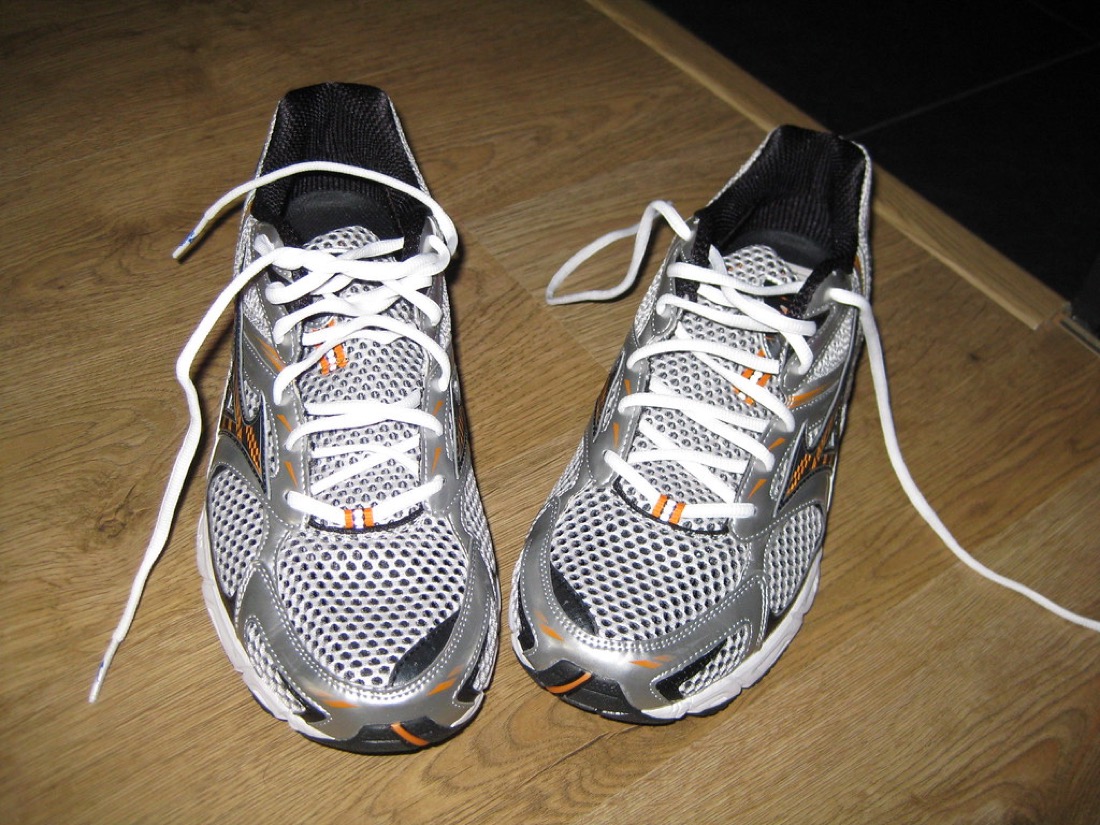
Photo: minorissues, CC BY 2.0, via Flickr.
Measure the whole fit problem
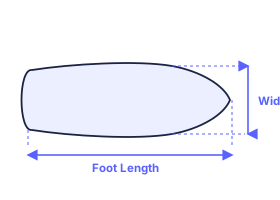
Measure your longer foot while standing, then note the widest part of the forefoot and any high instep, bunion, orthotic, or sock requirement. Brands do not use one universal last shape. A rounded casual trainer, a narrow dress shoe, and a hiking boot can all use the same stated length while feeling entirely different across the toes.
Read width information carefully
Some brands offer letter widths; others use terms such as standard, wide, narrow, roomy toe box, or performance fit. Read the exact product page rather than assuming that a width option means the shoe is wider in every direction. A wider forefoot can still have a low instep, a firm heel counter, or a tapered toe shape.
Use length as the first filter, then compare the width and product description. If a retailer gives no width data, inspect the stated fit, upper material, and return policy. Do not turn a review saying “runs narrow” into a universal rule; another shopper may have a different foot shape, sock thickness, or preferred ease.
Test a pair indoors
With intended socks, lace both shoes and stand, walk, turn, and flex. Your longest toe should not hit the front. The forefoot should not become numb or compressed, and the heel should remain stable without painful tightening. Check both feet: asymmetry is common, and the larger or wider foot normally controls the decision.
For the length method, use our at-home foot guide. For a broader reference, see the shoe size chart. A precise length measurement is valuable, but it is only the first part of choosing a shoe that can actually be worn.
A practical width decision
Consider two shoppers whose longer foot measures 260 mm. Both begin with the same length range in a running shoe chart. The first has a narrow heel and average forefoot, wears a thin running sock, and wants a secure performance fit. The second has a broad forefoot, a high instep, and plans to wear a thicker sock on longer runs. A length-only conversion would give both shoppers the same answer, but the fit evidence does not.
The first shopper should confirm that the heel does not lift when laced normally and that the toe box does not force the toes together on a turn. The second should check whether the exact model offers a wide option or a roomier last before adding length. Moving up a full length may create empty space in front of the toes without solving pressure across the widest point.
Use this sequence when the fit feels uncertain:
- Match the longer foot to the exact model’s stated length range.
- Identify whether the concern is forefoot width, instep height, heel hold, or toe shape.
- Read the product’s width choices and fit description before relying on customer reviews.
- Test both shoes with intended socks, on a clean indoor surface, while walking and turning.
- Keep the pair only if length, width, and heel hold work together.
What the product page should disclose
Merchants can reduce avoidable width returns by naming the information shoppers need: available width options, whether the toe box is tapered or roomy, upper material, intended activity, and the fit difference between standard and wide versions. A vague “true to size” statement does not answer a width question.
Official product charts remain the final purchase reference. Compare the current adidas shoe chart, Nike footwear fit guide, or New Balance size and width guide with the exact product listing. These sources are brand-specific, so use them to understand the brand’s own labels rather than as a universal width conversion.
Avoid the common width shortcuts
The most expensive shortcut is going up a full size before identifying the pressure point. Extra length may feel temporarily more comfortable while walking in a shop, then cause heel movement or toe instability over a longer day. Another common mistake is testing while seated. Feet spread under load, so a pair that feels harmless on a bench may feel restrictive after several minutes of standing and turning.
Keep a short comparison record when trying two sizes or widths: the sock used, pressure at the little toe and instep, heel movement, and whether the shoe still feels stable after a few minutes. That record makes a return decision repeatable and helps distinguish a width problem from a lacing, sock, or activity problem. If pain, numbness, or rubbing persists, stop wearing the pair rather than trying to break it in through discomfort.