
A bra label is a shorthand for two measurements: the band around the ribcage and the cup volume created by the difference between the bust and band. It is useful, but it is not a promise that every style with the same label will feel identical. Wire shape, cup height, fabric stretch, strap placement, and the brand’s grading all influence fit. The most reliable starting point is a fresh measurement followed by the chart for the exact brand and style.
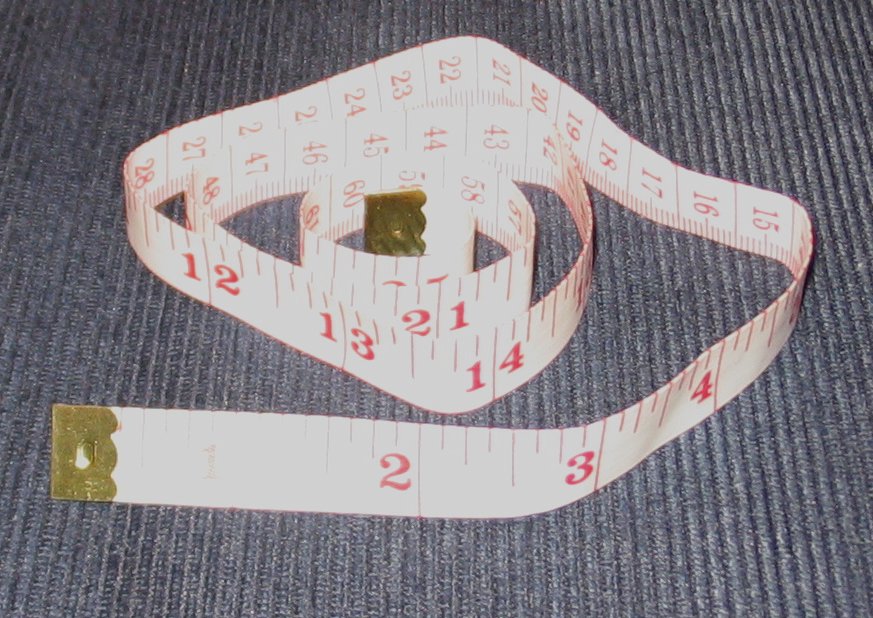
Photo: Jim Thomas, CC BY-SA 3.0, via Wikimedia Commons.

Prepare to measure consistently
Use a soft tape measure, a mirror, and a non-padded bra that does not significantly change breast shape. Stand upright and keep the tape level all the way around the body. Measure at roughly the same time of day when comparing results; posture and swelling can change a close measurement. Record centimetres or inches exactly as measured before converting anything. Rounding early makes it harder to understand why two adjacent sizes both seem plausible.
Measure twice. If the two readings differ materially, adjust the tape and take a third reading rather than choosing the more convenient number. The tape should touch the body without digging in, twisting, or sliding up the back. A photograph is unnecessary, but using a mirror to check that the tape is horizontal is often more accurate than guessing by feel.
Take the underbust or band measurement
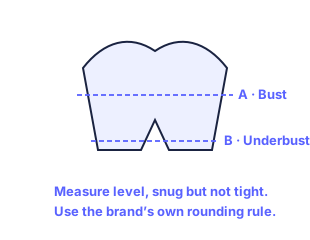
Place the tape directly under the bust, around the ribcage where the band will sit. Keep it firm and parallel to the floor. This is not the same as a loose waist measurement: the band provides most of the support, so a measurement taken too loosely may suggest a band that rides up during wear. Note whether the brand’s chart asks for a snug underbust, a tight underbust, or a finished band measurement. Those are different inputs.
Use the brand’s stated rounding rule only after reading the chart. Some systems map the measured number directly to a band range; others ask shoppers to round to a nearby even label. Do not apply an old “add inches” formula to every brand. Modern size charts and regional systems vary, and the product page is a better authority than a generic conversion graphic.
Take the bust measurement
Wrap the tape around the fullest part of the bust. Hold it level, keep your arms relaxed, and do not pull the tape tight enough to compress the tissue. For a soft, unlined, or non-wired bra, a lightly supported measurement may better reflect the shape the bra needs to contain. For structured styles, use the measuring method the brand publishes when it provides one.
The difference between bust and underbust can help narrow the cup range, but cup letters are not universal volumes. A D cup on one band has a different volume from a D cup on another band, and two brands can use different cup construction. Treat the calculated result as the row to try first, not as proof that a particular bra fits.
Read the chart in the right order
Start with the band range, then use the bust measurement to identify the suggested cup. Confirm whether the chart is in US, UK, EU, French, or another notation before comparing letters. UK double-letter sequences and EU band labels are commonly misread when shoppers use a chart from a different region. If a retailer offers a fit quiz or a product-specific note, use it as a secondary check rather than replacing the measurements.
If measurements land across two rows, read the style description. A firm balconette, a stretch bralette, a nursing bra, and a high-impact sports bra need different amounts of containment and band tension. For a close decision, order two nearby sizes only when the retailer’s exchange conditions allow an indoor fit check.
Check the fit after trying it on
Fasten a new bra on the loosest hook so the band has room to tighten with wear. The back should stay level; if it climbs upward, the band may be too loose or the straps may be carrying too much load. The centre front of a wired bra should sit close to the body when the design is intended to tack. Cups should contain the tissue without cutting in at the top, leaving large empty spaces, or placing the wire on breast tissue.
Move your arms, sit, and take several normal breaths. Straps should stabilize the cups, not be tightened enough to compensate for an unstable band. A small adjustment in strap length can solve a strap issue; it cannot fix a band or cup mismatch. Keep notes on the style, fabric, size, and the specific fit issue. That record is more useful for a future purchase than remembering only a cup letter.
Understand sister sizes without using them as a shortcut
Sister sizes keep approximately similar cup volume while changing band length. Moving to a smaller band normally requires a larger cup letter; moving to a larger band normally requires a smaller cup letter. This can help when a cup feels right but the band does not, yet it is not a universal repair. Wire width, cup depth, and shape can change enough that the sister size feels different even when the nominal volume is close.
Use sister sizing after identifying the actual problem. If the band is firm and stable but the cup cuts in, increase cup capacity first. If the band rides up and the cups otherwise fit, evaluate a firmer band and the corresponding cup adjustment. If the wire shape is wrong, changing size may not solve the issue; a different style can be the better answer.
A final purchase checklist
- Record a level, firm underbust and a level fullest-bust measurement.
- Read the exact brand and region shown on the product page.
- Start with the band range, then use the bust range for the cup suggestion.
- Check the product’s support level, fabric stretch, and style notes.
- Fit on the loosest hook and assess band, cup, wire, and strap behaviour separately.
- Keep the result only when it remains comfortable through normal movement.
For the general reference table, use the Bra Size Chart. If you are building this information for a store, see How to Build a Size Chart for a New Clothing Product. A careful measurement creates a defensible starting point; the exact product and its fit behaviour make the final decision.