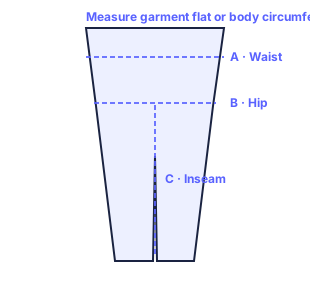
Levi's jeans use numeric sizing, waist × inseam for men and waist for women. Getting your measurements right before ordering is the key to avoiding returns, especially when buying 501s or 511s online.
Use the official chart for this purchase
Measure the relevant body part or longer foot, select the official table for the exact product and audience, then compare the measurement with the column named by that table. Do not treat this independent guide as a complete brand chart.
Fit Notes for Levi's
Brand-specific sizing advice that goes beyond the standard chart.
1
Men's Levi's are labeled as waist × inseam (e.g., 32×32). Measure your natural waist and inseam accurately before ordering.
2
Women's Levi's use a single waist number (0–18+). A size 28 waist = approximately US size 6/8.
3
Denim shrinks slightly after the first wash, especially raw denim styles. Some shoppers size up one for a more relaxed post-wash fit.
How the fit numbers differ before you measure anything
Levi’s biggest advantage for online shoppers is that its jeans are named by fit, not just by size. The three-digit numbers describe a leg shape, and the same waist size feels completely different across them. The 501 is the original straight fit: a mid-to-high rise that sits near the natural waist, a regular cut through the seat and thigh, a leg that stays straight from knee to hem, and the signature button fly. The 511 is the slim fit: a lower mid rise that sits below the waist, a slimmer top block through the hip and thigh, and a straight-slim leg that stays narrow to the ankle. The 541 is the athletic taper: extra room through the seat and upper thigh for builds that carry muscle there, tapering from the knee down so the leg still reads modern rather than baggy.
Read the fit description before the size chart, because the fit family decides which body points matter most. On a 501, waist and seat dominate; on a 511, thigh and hip clearance decide; on a 541, the seat and upper thigh are given room and the taper does the rest. If you already own a Levi’s fit that works, note its style number. It is the most reliable starting point for the next purchase.
Measure waist, seat, thigh, and inseam the way the chart expects
Levi’s published size charts pair each waist size with a seat and thigh range, so measuring only your waist throws away most of the information. Measure the waist at your natural waistline with the tape snug but not tight. Measure the seat around the fullest part of the hips, keeping the tape level. For the thigh, wrap the tape around the fullest point of one thigh. For the inseam, measure from the crotch seam of a pair you like down the inside leg to where you want the hem to end, or measure down your own inner leg from crotch to ankle while standing straight.
Compare all four numbers with the chart, not just the waist. Two people with the same waist measurement can need different fits because of seat and thigh. That is exactly what separates a 511 from a 541. Levi’s published guide also maps inseams to height as a rough check: around a 30-inch inseam for heights of about 5’6” to 5’8”, 32 for 5’8” to 6’, and 34 for 6’ to 6’4”. Treat that as a sanity check, not a substitute for measuring a pair you already wear well.
Rigid, stretch, and shrink-to-fit denim follow different rules
The same style number comes in different fabrics, and the fabric changes how you should size. Most Levi’s are pre-shrunk, so a cold wash with a line dry is unlikely to change the fit much. Rigid 100% cotton denim starts stiff and gradually molds to the body through wear, relaxing slightly with repeated use, but it gives nothing on day one, so it must clear your seat and thigh from the start. Stretch denim contains a small percentage of elastane and moves with you, which makes a slim fit easier to wear; the trade-off is that stretch jeans can relax through the day and sit looser at the waist by evening.
Shrink-to-Fit 501s are the exception to every rule above. They are made from raw, unwashed denim that is meant to shrink after purchase, so they need their own sizing logic rather than the standard chart.
Shrink-to-Fit sizing, step by step
Levi’s own guidance for Shrink-to-Fit describes three approaches. The traditional method is to buy true to size in the waist and two inches up in the length, then soak the jeans while wearing them for at least half an hour (hotter water shrinks more) and keep them on until they dry so the denim molds to the body. A simpler version of the advice is to buy two sizes larger than usual and let the first wash bring the pair down. If you plan to machine wash and machine dry regularly, Levi’s recommends sizing up more aggressively: roughly one to three inches in the waist depending on your size, and three to four inches in the inseam, because a tumble dryer causes more shrinkage than air drying.
Expect some variability: shrinkage depends on water temperature, drying method, and the specific fabric, and experienced wearers report the final amount varies from pair to pair. If the ritual appeals to you, accept that uncertainty and plan for the first wash; if you want predictability, choose a pre-shrunk pair and skip it.
Women’s fits use a different set of numbers
Women’s Levi’s are generally labelled with a single waist number, like 24, 26, or 28, rather than waist × inseam. A size 28 waist corresponds to roughly a US 6 or 8, and the published chart pairs each waist number with a hip measurement, which matters more than the conversion because the fit families differ so much. The 721 is a high-rise skinny that is slim through the hip and thigh; the 724 is a high-rise straight leg; the Wedgie is a high-rise cut with a snug fit through the hip and thigh inspired by vintage Levi’s. The same waist number in these three styles will not fit the same hips the same way, so compare hip and thigh against the chart for the exact style.
Inseam options on women’s styles are shorter than the men’s range, commonly around 28, 30, 32, and 34 inches; choose from how you will actually wear the pair, with the shoes and cuff you intend, rather than from a previous brand’s jeans.
Before you order: the Levi’s pass
Note the style number and read its fit description before anything else: straight, slim, skinny, taper, bootcut, and relaxed all sit differently on the same waist. Then measure waist, seat, thigh, and inseam and compare all four with the chart for the exact style, checking the fabric at the same time, because rigid, stretch, selvedge, and Shrink-to-Fit denim size differently. If the pair is Shrink-to-Fit, settle the wash and dry method first and apply the matching sizing guidance. Finally, try the pair indoors with the shoes you intend to wear; sit, squat, and walk before removing tags.
When the same size fits differently across washes
Levi’s sells the same style number in many washes and construction tiers, and the same tagged size can measure slightly differently from one wash to the next. Some wearers also report small differences between pairs from different production locations, so a 32×32 that fit last year is not a guarantee that a new 32×32 in another wash will be identical. When a pair works, record the style number, wash name, fabric content, and size. That combination, not the waist number alone, is your repeatable size; where possible, order that same wash again or compare new pairs against it.
This is an independent educational guide. The current Levi’s product listing and its size chart remain the final reference for any purchase.
Frequently Asked Questions
Common sizing questions about Levi's answered.
How do Levi's sizes work?
Men's Levi's jeans are labeled with two numbers, waist size × inseam length (e.g., 32×30). Women's Levi's use a single waist number (24–38) or the standard 00–20 US size scale depending on the style. The 501 and Wedgie fits use a waist number.
Do Levi's run big or small?
Levi's generally run close to true size, but it varies by fit. The 501 Original is a relaxed straight leg and may feel roomier. The 511 Slim and 512 Slim Taper run slim and can feel snug. When in doubt, measure your waist and compare to the size chart.
What is a Levi's size 28 in US women's sizing?
A Levi's size 28 waist is approximately a US women's size 6 or 8, depending on the brand and cut. This equates to roughly a 28-inch natural waist measurement.
How do I find my Levi's inseam length?
Measure from your crotch seam down to your ankle bone while standing straight. Common inseam lengths are 28, 30, 32, and 34 inches. If between lengths, consider where you prefer the jeans to end.
How should I size Levi's 501 Shrink-to-Fit jeans?
Levi's guidance for Shrink-to-Fit jeans is to plan for shrinkage before buying. For the traditional soak-and-wear method, buy true to size in the waist and two inches up in the length, then soak the jeans while wearing them and keep them on until they dry. If you plan to machine wash and dry, size up roughly one to three inches in the waist and three to four inches in the inseam, since a tumble dryer shrinks more than air drying.
Is this an official Levi's size chart?
No. This is an independent size reference guide produced by SizeChartBase and is not affiliated with, endorsed by, or officially associated with Levi's. Levi's is a registered trademark of its respective owner. Always refer to Levi's's official website for the most current sizing information.
Where does the Levi's size data come from?
This independent guide links to Levi's's official sizing source and explains how to read it. It does not reproduce a complete Levi's chart; verify the current product listing before purchasing.
Standard Size Charts
Generic reference charts for this product category — useful when shopping across different brands.
Disclaimer: This page is an independent size reference guide produced by SizeChartBase and is not affiliated with, endorsed by, or officially associated with Levi's. All brand names, logos, and trademarks are the property of their respective owners. Size data is compiled from publicly available sources including brand websites and product pages, and is provided for informational purposes only. Always verify sizing with the brand's official website before purchasing.