
Hat sizing is one of the simplest measurements to take and one of the easiest to distort. The number is based on head circumference, but a felt fedora, fitted cap, helmet-like winter hat, and adjustable baseball cap do not create the same amount of internal space. Start with circumference, then read the product’s material, lining, crown depth, and adjustment information before choosing a label.

Photo: State Library of New South Wales, public domain, via Wikimedia Commons.

What you need before measuring
Use a flexible tape measure. A tailor’s tape is best; a non-stretch string and ruler can work if the string is kept flat and marked carefully. Measure with the hairstyle, hair accessory, or liner you expect to wear with the hat. Thick braids, a bun, a wig, or a cold-weather headband can change the useful fit more than a small numerical difference.
Stand in front of a mirror and take two readings. The tape should be snug enough to stay in place but not pulled tight against the skin. If the readings differ, use a third measurement and check that the tape has not drifted upward or downward at the back of the head.
Find the correct measuring line
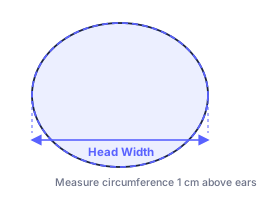
Place the tape around the widest practical part of the head: usually about one finger-width above the eyebrows, just above the ears, and around the fullest point at the back of the skull. Keep it level. Measuring high on the crown produces a smaller number and may cause a fitted hat to sit too tight; measuring too low can suggest a hat that slides over the ears.
Write down the result in both centimetres and inches if you shop internationally. Do not convert until the original reading is recorded. A brand may show centimetres, fractions of inches, fitted hat sizes, or S/M/L ranges, and its own chart will state the intended correspondence.
Match the measurement to the right hat system
Fitted hats usually map a circumference range to a fractional or numeric label. Pick the row containing your actual measurement, not the row closest to a remembered cap size. Adjustable caps use a range, but the range is still meaningful: a head at the extreme edge of an adjustment range may not have enough room for a comfortable closure or may leave too much strap exposed.
Beanies and soft knit hats often use S/M/L labels or a broad one-size range. In this case, material recovery and crown depth matter as much as circumference. A thick, fully lined knit can feel much smaller than a lightweight rib knit carrying the same label. For a hard-brimmed or structured hat, check whether it has an internal sweatband, because this reduces the usable circumference.
Account for style and intended use
Choose a stable fit for wind, cycling, sport, or prolonged walking. A hat that is merely loose may become distracting when moving; one that creates a pressure line after ten minutes is unlikely to become comfortable. For fashion hats worn briefly, a small amount of ease may be acceptable, but the hat should still sit at its intended position without constant adjustment.
Crown shape changes perception. A shallow cap can feel restrictive even when circumference is correct, while a deep beanie can feel secure with more ease. Brim weight, lining, internal elastic, and an adjustable drawcord also affect how the hat settles. Product images can show silhouette, but the written size and construction details should guide the purchase decision.
Test a hat when it arrives
Try the hat indoors with your normal hairstyle. Place it where you intend to wear it, turn your head, bend forward, and move naturally. Check for pressure above the ears, across the forehead, and at the back of the head. A fitted hat should not leave a painful groove or require force to remove. An adjustable cap should remain secure without the closure being pulled to its final notch.
If the hat has a leather or fabric sweatband, expect a small amount of break-in only when the manufacturer says the material can relax. Do not assume a structured hat will stretch a full size. Altering a hat without guidance can change the crown shape and may make returns impossible.
Common measuring errors
The most common error is measuring the wrong line: around the hairline rather than the intended hat band. Another is measuring over bulky hair for a hat that will be worn with hair flattened underneath. Shoppers also mistake a one-size label for a universal guarantee, even though one-size products still specify a minimum and maximum range.
Keep a simple record after a successful purchase: brand, style, stated size, head measurement, hair setup, and whether you preferred a snug or relaxed fit. This is especially useful when comparing fitted caps with soft hats, because the same circumference can lead to different choices.
Use the Hat Size Chart to translate the measurement into common labels. If a size table is unclear, contact the retailer and ask whether it refers to head circumference or the finished inner band. That one question avoids many unnecessary returns.