
Ring sizing looks like a single number, but the right fit depends on the inside diameter or circumference, the width of the band, the shape of the knuckle, and ordinary changes in finger size through the day. A ring should move over the knuckle with gentle resistance and sit securely at the base of the finger without painful pressure, spinning constantly, or trapping moisture. Start with a measured reference, then account for the specific ring design.
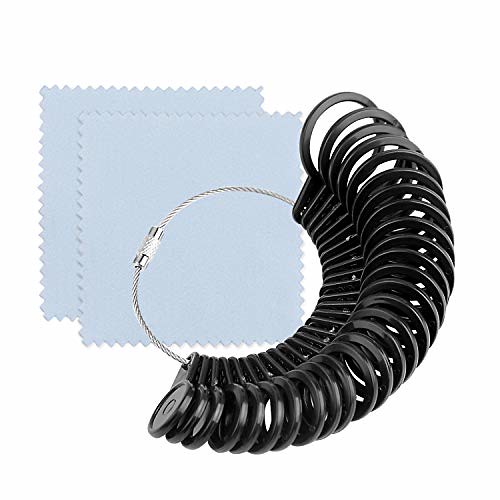
Photo: shop8447, CC0.
Choose the most reliable method available
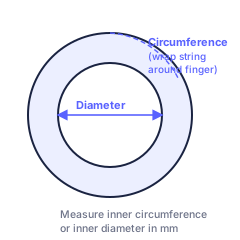
The best home reference is a ring that already fits the intended finger and is worn in similar conditions. Place it on a ruler or ring-sizing printout and measure the inside diameter from inner edge to inner edge at the widest point. Do not measure the outer edge; band thickness changes that number. Compare the diameter to the jeweller’s own table because US, UK, EU, Japanese, and numerical systems do not use the same labels.
If there is no suitable ring, measure finger circumference with a non-stretch strip of paper or a flexible tape. Wrap it around the base of the finger where the ring will sit, mark the overlap, and measure the length in millimetres. Repeat at least twice. Paper that is pulled too tight, folded, or placed across the knuckle at an angle produces a misleading result.
Measure at a normal time of day
Finger size can change with heat, cold, exercise, hydration, salt intake, and travel. Measure when hands are at a comfortable normal temperature, not immediately after a hot shower, intense exercise, or exposure to cold air. Take a second reading later in the day if the ring is important or expensive. If the readings span two sizes, the ring’s band width and the knuckle will help determine the safer option.
Avoid using a string that stretches or a downloadable chart printed at an unknown scale as the only evidence. A printable tool can be a useful cross-check only when its calibration marker confirms the page printed at 100 percent. A jeweller’s physical sizer remains the best option for close decisions.
Account for the knuckle and the band
Some fingers are wider at the knuckle than at the base. In that case, choose a size that can pass the knuckle without forcing the ring, then assess whether the ring spins after it settles. A jeweller may offer sizing beads, an inner adjuster, or another professional solution when a single round size cannot solve both points.
Band width also matters. A wide comfort band contacts more skin and usually feels firmer than a narrow delicate band with the same inner diameter. Do not assume a size that fits a thin stacking ring will be comfortable in a wide wedding band. Ask the jeweller whether the design needs a width adjustment, especially for bands wider than a typical narrow ring.
Use the correct finger and hand
Measure the exact finger and hand for the new ring. Dominant hands can be slightly larger, and ring-finger measurements do not automatically transfer to the index finger or thumb. If a ring is intended for occasional wear above the knuckle or on a chain, its fit requirement is different from an everyday ring worn at the base of the finger.
For stackable sets, consider the combined width and how the rings move together. A group of thin rings can create more friction and feel tighter than each individual ring. Measure and test the intended combination when possible rather than selecting every piece from the same remembered size.
Test fit without forcing the ring
When trying a ring, it should slide over the knuckle with a small amount of resistance and rest without leaving deep, painful marks. Rotate it, make a fist, wash and dry your hands, and check whether it stays in place. A ring that falls off with a relaxed hand is unsafe; one that requires force, causes numbness, or cannot be removed after a short period is too tight.
Do not use soap, oil, or a forced twist to make a close ring “work” as a purchasing test. These methods hide a size problem and can make removal difficult. If swelling or pain occurs, remove the ring safely and seek professional assistance if it will not come off.
Keep a decision record for custom or costly rings
For an engagement ring, a custom band, or an international order, record the method used, diameter or circumference in millimetres, the brand’s chart, the chosen size system, band width, and the time of day. Share the raw measurement with the jeweller instead of only giving a converted label. This lets them identify a chart mismatch before manufacture.
- Measure a known fitting ring by its inside diameter, or measure finger circumference twice.
- Use the jeweller’s own conversion table.
- Account for the exact finger, hand, knuckle, and band width.
- Check at a normal temperature and consider a second reading later in the day.
- Choose professional sizing help for close, valuable, or non-returnable purchases.
Use the Ring Size Chart for a general comparison, then verify the final choice with the seller’s current instructions. A conversion table can translate measurements; it cannot predict every band’s comfort.