Measure waist, hip, and high hip, then decide which controls
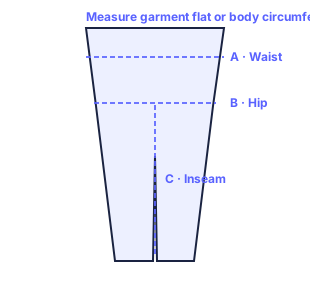
Bottoms are chosen by three measurements that describe different points of the same garment. The natural waist sits at the side crease, usually an inch or two above the navel and higher than most waistbands rest. The full hip wraps the widest curve of the seat, typically seven to nine inches below the waist. The high hip is the intermediate point at the top of the hip bone, a few inches below the waist, and it matters whenever a low-rise pair is designed to sit below the natural waist.
Measure all three in fitted underwear while standing naturally, then ask which point the style is built around: high-rise pieces land at the waist, mid and low-rise pieces land at the hip or high hip. Comparing the wrong column is how a correctly labelled pair still misses.
Waist-in-inch labels beat the size number
A waist size stated in inches is a measurement; a numbered size is a label whose meaning drifts from brand to brand. Around the standard charts, a 26-inch waist roughly matches a US 2, a 27 a US 4, and a 28 a US 6, but individual brands move those pairings, and some label the same waist a size 3 or a size 5. That is why the same person wears a 27 in one denim line and a 29 in another without gaining an inch. Shop the waist number first: find your measured waist in the brand’s chart, read the corresponding hip and thigh range, and use the numbered or lettered size only as a search filter. The inch label travels between brands; the size number stays behind.
Rise decides where the waistband actually sits
The rise, the distance from the crotch seam to the top of the waistband, determines which body point the pair is sized for. Low-rise sits at or just below the hip bone and is graded from the hip and high hip; mid-rise lands around the navel; high-rise reaches the natural waist or above, with front rises commonly running from roughly seven to eight inches on low styles up to ten inches or more on high ones. This is why the same labelled size fits differently at different rises: a high-rise 28 is measured at your true waist, while a low-rise 28 is measured lower, where your body is wider.
If the style does not state its rise, compare the waistband position against a pair you own and re-read the chart at that point. The front rise alone can also mislead: the back rise does more work in the seat, so a pair that clears the front but rides down at the back usually needs more rise rather than more waist.
Curvy, straight, and athletic cuts exist for a reason
Most standard bottoms are drafted around a waist-to-hip difference near ten inches, and real bodies regularly differ from that pattern. A curvy cut is drafted for a larger difference (around twelve to thirteen inches) with more room through the seat and thigh and a waistband that stays proportionally smaller, which is the fix when regular pairs fit the hip but gape at the back waist. A straighter or athletic build has a smaller difference and usually fits best by sizing to the hip and accepting, or tailoring, the waist. Contoured waistbands that curve inward at the back also reduce the gap without changing the cut. Work out your own difference between waist and hip, then use it to choose between standard and curvy lines before comparing individual charts.
Denim stretch and recovery change the fit over a day
Denim is not one material. Rigid, 100 percent cotton jeans start firm and relax with wear, moulding to the body but losing shape at the knees and seat; they should feel comfortably snug, not painful, when new, and you should expect them to grow slightly. Stretch denim, commonly blended with a small percentage of elastane, springs back after wear but varies by blend: a pair with strong recovery stays put through a day of sitting, while a thin, heavily stretched pair can bag by the evening.
The sit test matters more than the mirror: sit, stand, and walk for a few minutes before deciding, because most denim problems appear at the hip, knee, and waistband only after the body has moved through them. If a stretch pair feels comfortable in the fitting room, expect it to feel looser by the second wear; if a rigid pair feels slightly tight at the waist, expect it to ease to just right.
Inseam, hemming, and when length solves the problem
Inseam is the one bottom measurement best taken from a garment rather than your leg. Lay a pair that fits well flat, smooth the fabric, and measure from the crotch seam down the inner leg to the hem. Petite lengths generally run from about 25 to 28 inches, regular from about 29 to 32, and tall from around 33 upward, with every brand drawing the lines slightly differently. Length is also the cheapest alteration in the fitting room: a hem is quick, while a seat, thigh, or rise that does not fit is not worth trying to rebuild. Choose the size that clears the hip, thigh, and waist, and let the hem absorb the inches.
One waist and one hip, walked through
A worked example beats a summary, so take a waist of 29 inches with hips of 40. That 11-inch difference sits at the edge of what standard cuts are drafted for, which means regular pairs will often gap at the back waistband; a curvy line, drafted for a 12 to 13 inch difference, is the safer first try. When the hip fits and the waist gaps, remember that the fix is a different cut or a contoured waistband, not a size change.
One caution attaches to every number above: waist and hip grading varies by brand, and the numbered size is the least reliable field on the chart. Confirm the seller’s current chart for the exact style, and when two brands disagree, trust the waist-in-inch column, which means the same thing everywhere.
If you shop mostly one brand, save your three measurements and re-check them each season. Denim with elastane relaxes with wear, and your own measurements drift with training and time, so a chart check at the start of a season prevents most wrong orders before they happen.