Why swimwear is sized tighter than street clothes
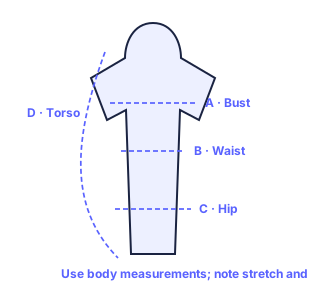
A swimsuit is engineered for water, and the sizing logic follows. Swim fabric must hold its shape when wet and stay put through movement, so suits are cut to sit closer than clothing of the same label. Because the fabric stretches when pulled on and settles in water, a suit that feels reassuringly snug when dry will usually relax to a secure fit in the pool. The practical upshot is that your dress size is only a weak hint here: measure the bust, waist, and hip directly, in fitted underwear, and let the swim chart’s own columns decide the size.
A swimsuit also offers no ways out when it fails: no belt, no layer, no belt loop. That is why the chart earns more trust than it does in everyday clothing. Manufacturers also grade swim ranges tightly, so the letter or number you wear in knitwear does not automatically carry over to the same label in swim.
One-piece fit: torso length joins the chart
A one-piece is sized in three dimensions at once, and torso length is the one most charts cannot express in a single number. Measure the torso the way suit makers do: run the tape from the top of the shoulder, down over the fullest part of the bust, through the legs, and back up to the starting point, keeping it comfortable rather than tight. If that girth is long for the size your bust and hip suggest, the suit will pull the straps down, dig at the shoulders, and ride up below: all symptoms of length, not width. Taller wearers and anyone between sizes should lean to the larger of the two options and look for tall or long-torso styles when the brand offers them, because a one-piece cannot be hemmed or taken in the way a dress can.
Bikini tops: band, cup, or letter: know which system you’re in
Bikini tops come in three sizing languages. Alpha tops map S, M, and L to band and bust ranges, the way clothing does. Bra-sized tops use a band and cup such as 34D, where the band (measured snugly under the bust) carries the support and the cup letter codes the difference between the bust and band measurements. Band-only tops skip the cup question entirely and rely on stretch or tie closures. Each system makes different promises: a bra-sized top supports a fuller bust properly, a tie top adjusts but supports less, and an alpha top splits the difference.
Read which system the chart uses before comparing anything, and remember that the same letter means different volumes in different systems.
Bottoms: hip measurement and the coverage you actually want
Bikini bottoms are decided by the hip and by taste, in that order. The hip at its fullest point sets the size, and for a low-rise cut the high hip at the top of the hip bone matters too; coverage is a style choice that changes where the seams sit, not what size you need. A cheeky cut, a medium-coverage brief, and a full-coverage bottom in the same size all fit the same hip; they differ only in fabric placement. High-waist bottoms add the natural waist to the equation, so compare both measurements when the band sits above the navel. One of the quiet advantages of separates is that the top and bottom can be bought in different sizes, which suits the many bodies whose bust and hip charts do not agree.
Chlorine, heat, and stretch: what happens after the first swims
The suit you try on is not exactly the suit you will own. Chlorinated water and heat gradually break down elastane, the stretch fibre that gives swim fabric its recovery, so a suit relaxes slightly over a season and more quickly with frequent pool use; polyester-rich fabrics generally resist chlorine and hold their colour longer than nylon and elastane blends.
That wear pattern is why a firm, even-feeling fit is the right starting point for a stretch suit: if you are between sizes and the smaller size is firm rather than digging, it often serves better once the fabric relaxes, while underwire and structured tops are kinder when sized up. Rinse suits in fresh water after use and keep them out of hot tubs and spin dryers to slow the loss of stretch. If the suit is mostly for one summer of regular pool use, buy for how it fits in the water today rather than how you hope it will fit next season.
Trying on swimwear without the guesswork
Swimwear is tested with the hygiene liner in place and the movements of a swim, not a photograph. Bend, sit, and sweep both arms overhead; check that the straps stay on the shoulders, the leg openings and underarm seams lie flat instead of digging, and the fabric does not stretch sheer across the seat when you move. Adjustable straps and tie sides give the fit its final tune, but a suit that fails while standing still will only fail louder in water. Note the seller’s return rules before removing tags, since many retailers exclude swimwear from returns once it has been worn.
Before the order goes in
One caution before you order: fabric stretch and grading vary by brand, so the chart that fits you at one label is only a starting point at the next. Confirm the seller’s current chart for the exact style, and keep in mind that swimwear is often excluded from returns once the hygiene liner comes off.
A small worked example may make the choice more concrete. Suppose your bust reads solidly in the medium column while your hips sit at the top of the large column. In a one-piece you take the large and compare your torso girth before committing; in separates you simply buy a medium top and a large bottom. Both orders use the same measurements. What changes is which column controls.
If the two columns split, buy the top and bottom separately and re-measure at the start of each season. Chlorinated pools and sun age elastane, so a suit that fit snugly in June has simply done its job by September.