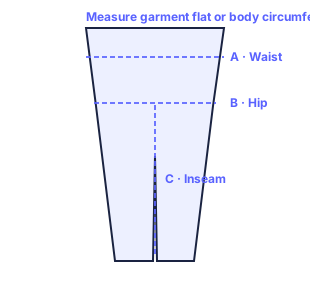
The two numbers on the tag measure only two things
A label like 32×30 states a waist of 32 inches and an inseam of 30 inches, and nothing else. It says nothing about the rise, the seat, the thigh, or the leg opening, and it does not even promise that the waistband actually measures 32. Treat the two numbers as the pair’s identifiers, then decide the fit from measurements and cut.
The waist figure on US labels is the designed waistband circumference where the trouser is meant to sit, which for most modern trousers is below the natural waist and near the hip bone. That position, not your belly-button measurement, is the one to compare against. If you measure around the natural waist, you can easily choose a waistband two sizes larger than the one you actually wear.
Measure at the height where the waistband will sit
Decide first where the trousers will sit: at the natural waist for high-rise and many dress trousers, or a few inches lower for most jeans and casual chinos. Measure around the body at that height with the tape snug enough to stay put but loose enough to slip a finger under. That number is your reference against the brand’s chart. Expect the labelled waist to run ahead of it, for the reasons below. Hip and seat matter whenever the cut is fitted there. Wrap the tape around the widest part of the seat and compare it with the garment’s hip figure when the brand publishes one. Men whose seat is substantially wider than their waist often find that a waistband which fits standing pulls when they sit, because the seat fabric is doing work the label ignores. In that case, size to the hip and have the waist taken in, or choose a cut described as athletic or relaxed through the seat and thigh.
Why a labeled 32 can measure 34
Vanity sizing is not only a women’s-wear habit. When CBC Marketplace measured jeans from major North American brands, most men’s pairs ran one to two inches above their labelled waist, with only a couple measuring true to size. Some outdoor and workwear brands openly state that their numeric label sits about two figures below the actual waistband measurement. The practical result is a familiar paradox: a man whose taped waist is 34 buys trousers labelled 32 and finds them comfortable, then orders a European brand’s equivalent and finds it snug.
That is why the label is a weak basis for a first order from a new brand. Compare the brand’s waist-range chart with your measured waist, and note where you fall inside each range. European labels follow the centimetre system: a US 32 generally corresponds to EU 48, a 34 to EU 50, and a 36 to EU 52 (roughly the waist in inches plus 16), but the same vanity gap can hide inside those numbers, so the chart still decides.
Rise changes what a waist size means
Rise is the distance from the crotch seam to the top of the waistband. A low rise sits below the hip bone, a mid rise near it, and a high rise at or above the natural waist. Because the body is wider lower down, the same labelled waist behaves differently at each rise: a 32 cut for the natural waist can be snug or impossible at the hip, where the torso is larger. Moving between rises is the most common reason the “same size” feels entirely different, and it is also why a pair can fit standing yet bind when you sit: a low waistband must span a larger circumference once the torso folds. If your usual trousers sit at the hip and you order a high-rise pair in the same waist label, expect to size down or to read the brand’s rise-specific advice. Conversely, a long torso, or a preference for tucking shirts, pushes toward mid and high rise.
Inseam is about height, shoes, and how the leg breaks
The inseam measures the inside leg from crotch seam to hem, and it controls how the trouser meets the shoe. As a rough map, men under about 5’7” often take a 30-inch inseam, those around 5’10” a 32, and those above 6’0” a 34.
But leg-to-torso proportions matter more than total height, and two men of the same height can wear different inseams.
The dependable way to choose is to measure a pair that already hangs the way you like: lay it flat, smooth the leg, and measure from the crotch seam to the hem. That number already includes your preference for a break, the slight fold where the trouser meets the shoe. Chinos and dress trousers often take a small break or none, while heavier jeans tolerate a fuller one. The hem is also the cheapest alteration a tailor can make, so when the waist, seat, and thigh are right, do not reject a pair over length alone.
Stretch denim relaxes less than rigid denim
Fabric behaviour changes which waist to order. Rigid, 100-percent cotton denim loosens with wear, commonly up to about half an inch to an inch at the waistband after several wears, which is why raw-denim buyers are often advised to buy snug at first. Stretch denim woven with elastane behaves differently: it recovers its shape, so it does not hand you extra room over time, and a pair that is snug on day one tends to stay that way. Read the fabric content before applying the old “denim stretches” rule, and treat stretch trousers like any other garment: order to the chart and your measured waist.
A worked example: a man with a 34-inch taped waist buying straight-leg stretch chinos from an untried brand should start with the label whose range covers 34 inches in that brand’s chart, often a 32, then check the hip figure against his seat. The same man buying raw denim might take a 31 or even a 30 if he wants a snug first month. Both orders run on the same rule: chart first, fabric second, label last.
If the pair arrives and the waistband gaps at the back while the seat fits, the rise or the brand’s block is the likely culprit, so try one size down in the same cut before switching brands. Waist labels, rise, and stretch behaviour vary by brand and fabric, so confirm the seller’s current chart for the exact pair before ordering.