H&M uses European sizing that runs slightly smaller than US standard. Their plus size line (H&M+) is separate from the main women's line. Use body measurements for the most accurate H&M size, especially when shopping online.
Use the official chart for this purchase
Measure the relevant body part or longer foot, select the official table for the exact product and audience, then compare the measurement with the column named by that table. Do not treat this independent guide as a complete brand chart.
Fit Notes for H&M Size Chart
Brand-specific sizing advice that goes beyond the standard chart.
1
H&M women's tops run approximately one US size smaller. A US Medium should order H&M EU 38 or an H&M Large for a relaxed fit.
2
H&M Divided and & Other Stories lines tend to run smaller than the main H&M line.
3
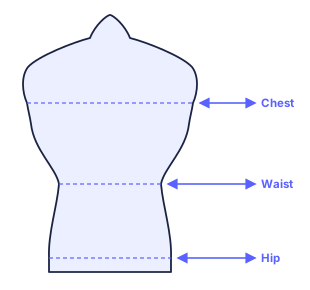
H&M jeans use EU waist sizing (28, 30, 32) for women and EU waist × leg for men. Measure your natural waist in centimeters before ordering.
Treat the EU number as the primary size, not the letter
H&M is a Swedish brand, and its sizing backbone is European: women’s clothing is labelled with EU numbers such as 36, 38, and 40, with letter and US equivalents shown as conversions. In H&M’s published guides, an EU 36 corresponds to roughly a US 4–6 and UK 8, usually labelled Small; an EU 38 to a US 8 and UK 10, usually Medium; an EU 40 to a US 10 and UK 12, usually Large; and an EU 42 to a US 12 and UK 14, usually Extra Large. The letters are the same letters you know from other brands, but they anchor to different centimetre ranges, which is why an H&M Medium is commonly described as fitting like a US Small.
The practical habit is to work from the EU number and the body measurements behind it, and to treat the letter as a secondary label. Regional storefronts display whichever scale is local, so confirm which column of the chart you are reading before comparing with anything.
Where H&M tends to run small, and where it fits as expected
Reports on H&M fit are more precise than “runs small.” Denim and tailored trousers are the items wearers most consistently describe as tight in the waist, hip, and thigh, with many shoppers going up a size, and sometimes two in rigid, non-stretch denim. Structured pieces such as blazers and tailored dresses get the same report, especially through the shoulders and bust. Casual t-shirts, jersey dresses, A-line skirts, and fine-knit sweaters sit at the other end: they are more often described as true to size, and generously cut knitwear can even run roomy.
That split is the useful map. If the item is woven, structured, or designed to hold a close shape, compare your measurements carefully and lean to the larger side when between sizes. If it is a soft knit or a casual jersey piece, your usual EU size is the right starting point.
Knit versus woven: two different fit decisions
The construction of the fabric changes how the same number fits. Knit fabrics stretch and recover, follow the body, and tolerate some imprecision, which is why knitwear and jersey tops feel forgiving. Woven fabrics have far less give; a woven shirt, blazer, or trouser has to fit your body almost exactly at its seam points from the first wear, because the cloth will not quietly accommodate an extra centimetre.
Check the composition before choosing a size. A cardigan in a fine knit with a generous cut can sit correctly even if its chart runs a centimetre or two above your body measurement; a woven blazer at the same margin will bind when you raise your arms or sit down. Stretch content matters as well. A woven trouser with elastane behaves differently from a 100% cotton one, so read the fabric line and any stretch information together with the size table.
What the Divided line changes, and what it doesn’t
Divided is H&M’s younger, trend-led line, and reports on how it fits vary enough that you should not treat it as a single rule. Some shoppers describe Divided pieces as smaller through the body than the main line; others find the relaxed, casual cuts more generous. Both can be true at once, because a line that mixes body-conscious party pieces with oversized streetwear will not fit consistently in one direction.
The practical conclusion is that a sub-line label, whether Divided, H&M+, Premium Quality, or a seasonal collaboration, is a reason to check the item’s chart, not a shortcut around it. Different collections are built on slightly different size blocks, so treat each item as its own sizing problem and let the measurements decide.
Jeans and trousers need more than a waist number
Bottoms are where H&M measurement errors hurt most. Women’s jeans and trousers are labelled with EU waist numbers, and men’s trousers pair an EU waist with a leg length, so the waist number is only the first of several decisions. Measure your waist at the point where the waistband will actually sit. The rise differs between high, mid, and low styles, and a higher rise sits on a different part of the body. Then check hip and thigh on the chart, because the hip and thigh are the points that run tight more often than the waist itself.
For rigid denim with no stretch, expect the first wear to be the tightest and allow for that in your choice. Stretch denim eases slightly with wear but can also relax past its original shape, which is why a snug stretch pair often turns out better than one that is comfortable on day one. Always check the inside-leg length too: a hem can be altered, but a seat or thigh that is too small cannot.
Kids’ clothing: choose by height, not age
H&M’s children’s sizing is pleasantly direct: the size label is the child’s height in centimetres. Baby sizes run from about 50 up to 92, and older children’s sizes run in steps such as 98, 104, 110, and 116, often shown as dual labels like 110/116. H&M’s own guidance is to choose by height and chest measurement rather than age, and to size up when a child is between sizes, since children grow faster than wardrobes get replaced.
Measure your child standing against a wall with shoes off, and take the chest at its widest point for tops and dresses. A small growth margin is useful, but avoid going so large that sleeves cover the hands or the child trips on a hem; one size above the measured height is usually plenty.
The H&M order routine, from cart to closet
Read the scale on the page, EU, UK, or US, and note the EU number.
Check the fabric: knit or woven, stretch content, and care instructions.
Compare your body measurements with the chart at the garment’s fitted points, using the intended silhouette.
For bottoms, check rise, hip, and thigh as well as waist; for kids, start from height in centimetres.
Try the item on before removing tags, seated as well as standing, and keep the order details until you are sure.
This is an independent educational guide. H&M’s current product pages and their measurement tables remain the final reference for any purchase.
Frequently Asked Questions
Common sizing questions about H&M Size Chart answered.
Does H&M run small?
Yes, H&M generally runs about one size smaller than US standard sizing. Their size 38 (EU) is roughly a US 8/10 or Medium. If you are between sizes at H&M, it is usually better to size up. Their denim tends to run particularly slim.
What is H&M EU 36 in US sizing?
H&M EU 36 is approximately a US women's size 4-6, or a Small. EU 38 is a US 8 (Medium), EU 40 is a US 10 (Large), and EU 42 is a US 12 (XL).
Does H&M offer plus sizes?
Yes. H&M offers plus sizes through the H&M+ range, available in women's sizes 1X to 4X (approximately US 14 to 28). Many H&M+ styles are also available up to size 22 in some markets.
How do H&M men's sizes work?
H&M men's clothing uses both EU and S/M/L sizing. Men's shirts label the collar size in EU (37/38, 39/40, etc.) or use S/M/L/XL based on chest measurement. An H&M men's Medium has a chest circumference of approximately 38-40 inches.
How do H&M kids' sizes work?
H&M children's sizes use European labels where the number is the child's height in centimetres. Baby sizes run from about 50 to 92, and older children's sizes run in steps such as 98, 104, 110, and 116, sometimes shown as dual labels like 110/116. H&M recommends choosing by height and chest measurement rather than age, and sizing up when a child is between sizes.
Is this an official H&M size chart?
No. This is an independent size reference guide produced by SizeChartBase and is not affiliated with, endorsed by, or officially associated with H&M. H&M is a registered trademark of its respective owner. Always refer to H&M's official website for the most current sizing information.
Where does the H&M size data come from?
This independent guide links to H&M's official sizing source and explains how to read it. It does not reproduce a complete H&M chart; verify the current product listing before purchasing.
Standard Size Charts
Generic reference charts for this product category — useful when shopping across different brands.
Disclaimer: This page is an independent size reference guide produced by SizeChartBase and is not affiliated with, endorsed by, or officially associated with H&M. All brand names, logos, and trademarks are the property of their respective owners. Size data is compiled from publicly available sources including brand websites and product pages, and is provided for informational purposes only. Always verify sizing with the brand's official website before purchasing.