UGG boots are lined with sheepskin that feels snug at first and compresses with wear. Most Classic styles come in whole sizes only and are recommended true to size, with half-size wearers rounding down. This guide covers UGG's most popular styles and what sizing means for each.
Use the official chart for this purchase
Measure the relevant body part or longer foot, select the official table for the exact product and audience, then compare the measurement with the column named by that table. Do not treat this independent guide as a complete brand chart.
Fit Notes for UGG Size Chart
Brand-specific sizing advice that goes beyond the standard chart.
1
UGG Classic Tall and Classic Short boots should be ordered true to size. The sheepskin lining will compress and conform to your foot.
2
UGG Ultra Mini and Tasman slippers run true to size. If you are a half size, round down for most UGG styles.
3
UGG boots in suede styles (Neumel, Neumel Platform) run true to size with a relaxed toe box, great for wider feet.
4
UGG kids' sizes cross over to women's: a big kid 5 fits roughly a women's 7, and a big kid 4 roughly a women's 6.
Separate the lining from the length
UGG boots are sized by foot length but feel like they are sized by volume, and the difference is the sheepskin. The Classic boots are built with a thick Twinface sheepskin upper and a sheepskin lining and insole, so a new pair feels snug across the top of the foot even when the length is correct. That initial snugness is expected: the lining compresses and molds to your foot within a few wears, and the boot settles into a comfortable hold. Retailer fit surveys show roughly three quarters of wearers rating the Classic styles true to size, which suggests many of the “runs small” reports are really the first-wear lining feel.
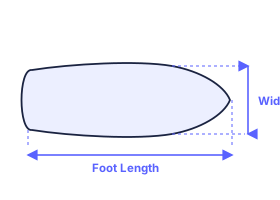
The practical consequence is to judge length, not tightness. Measure both feet standing, heel to toe, in centimeters, and use the longer foot. Compare that with the chart for the exact model. If your toes sit flat inside the footbed with a little room at the front and the heel stays put when you walk, the length is right even if the top of the boot feels firm.
Whole sizes: how to round a half size
Many UGG styles, including the Classic II boots, are sold in whole sizes only, which forces half-size wearers to pick a direction. The prevailing retailer guidance for the Classic II is to order the next size down when you are between sizes: the lining packs down, so a boot that starts slightly snug ends up shaped to your foot, while a boot that starts loose only gets looser as the lining settles. A minority of guides argue the opposite, that a lined boot should never start tight, so treat the rounding direction as a trade-off rather than a rule.
Round down when your longer foot sits comfortably within the smaller size’s measurement range and you wear thin socks or none.
Choose the larger whole size when you plan to wear thick socks, when your feet swell noticeably over the course of a day, or when your measurement lands near the top of the smaller size’s range. If you can, order both whole sizes and walk in each on a clean surface; heel lift while walking is the deciding signal in a lined boot.
Boots, slippers, and suede styles sit differently
One brand does not mean one fit, and UGG’s categories show why. The Tasman II slipper runs true to size with the same snug-at-first lining behavior, but because slippers are often worn barefoot, the sizing decision starts with socks: fit for how you will actually wear them, and expect a mold-to-foot break-in either way. Suede styles such as the Neumel family are a different animal: they run true to size with a more relaxed toe box, which makes them the friendlier option for wider feet.
Platform and weather-treated versions change the outside of the boot more than the length, but a coated or reinforced upper can feel stiffer through the first wears, so allow a longer break-in on those listings. Re-check the chart per model: a Mini and a Tall in the same numeric size should agree on length, but the shaft height and opening deserve their own look on the product page before you order.
The Australian label confusion, explained
The name itself causes mix-ups. The sheepskin boot style originated in Australian and New Zealand surf culture, and in Australia “ugg boot” is used as a generic term for sheepskin boots made by many local companies. The UGG brand on ugg.com, by contrast, is a US label, and its size charts are US-first, showing UK, EU, Japanese, and Chinese equivalents alongside. Neither arrangement is wrong, but they collide at the checkout: locally made Australian ugg boots may carry Australian or UK size labels that do not equal the US size you normally wear. If you buy from an Australian retailer, check which scale the listing uses before converting anything, then find the stated foot length in centimeters and match it to your own measurement; that figure is the one that travels across every labeling system without ambiguity.
Kids’ UGGs: measure, then add growth room
Kids’ UGG styles, including the Tasman II and the Classic boots, come in toddler, little kid, and big kid ranges, and the brand’s kids’ chart is its own table; do not convert an adult size down to fit a child. Measure the child’s longer foot while standing and leave the growth allowance the chart or retailer recommends. That allowance still applies to lined boots, because the lining molds to the foot while the shell length stays fixed.
The kids’ range is also a quiet option for adults with smaller feet: retailers commonly note that a big kid 5 fits roughly a women’s 7, and a big kid 4 roughly a women’s 6. If you go that route, check width as well as length, because kids’ lasts can be narrower, and a lined boot that is narrow will feel tight across the top even at the correct length.
A try-on sequence for a lined boot
Put on the socks you intend to wear (or none, for a barefoot slipper) and step into both boots.
Stand and check the length: toes flat, a little room at the front, heel not riding up.
Walk for a few minutes on a clean surface and expect firmness across the instep, not pressure on the toes or heel slip.
If the instep feels tight, give the pair a short indoor break-in period and watch for red marks or numbness, which mean the size itself is the problem.
Re-check the fit with the socks you will actually wear in winter if the pair is a winter purchase.
This independent page is not an official UGG chart. Confirm current model-specific measurements on the UGG site before ordering.
Frequently Asked Questions
Common sizing questions about UGG Size Chart answered.
Should I size up or down in UGGs?
Most UGG boots should be ordered in your true size. The sheepskin lining will feel snug at first but molds to your foot after a few wears. If you are a half size, UGG recommends sizing down to the nearest whole size for Classic styles. For slippers like the Tasman, true to size is the recommendation.
Do UGG boots stretch?
Yes, UGG boots stretch slightly with wear as the sheepskin lining compresses and molds to your foot shape. A boot that feels slightly snug when new will often feel perfect after a few days of wear. This is why UGG recommends true to size rather than sizing up.
What is UGG size 8 in EU?
UGG Women's US 8 = EU 39. Men's US 8 = EU 41. UGG uses a standard US-to-EU conversion scale. Their website also provides CM foot length charts for each style.
Do UGG sizes run small or large?
UGG sizes run true to size in length, but the sheepskin lining can make them feel snug at first. They do not run large or small in the traditional sense. The fit changes with wear. For the widest range of width accommodation, the Classic styles are most forgiving.
Is this an official UGG size chart?
No. This is an independent size reference guide produced by SizeChartBase and is not affiliated with, endorsed by, or officially associated with UGG. UGG is a registered trademark of its respective owner. Always refer to UGG's official website for the most current sizing information.
Where does the UGG size data come from?
This independent guide links to UGG's official sizing source and explains how to read it. It does not reproduce a complete UGG chart; verify the current product listing before purchasing.
Standard Size Charts
Generic reference charts for this product category — useful when shopping across different brands.
Disclaimer: This page is an independent size reference guide produced by SizeChartBase and is not affiliated with, endorsed by, or officially associated with UGG. All brand names, logos, and trademarks are the property of their respective owners. Size data is compiled from publicly available sources including brand websites and product pages, and is provided for informational purposes only. Always verify sizing with the brand's official website before purchasing.